Language courses. French is open by request.
Learn the sentence inside the scene.
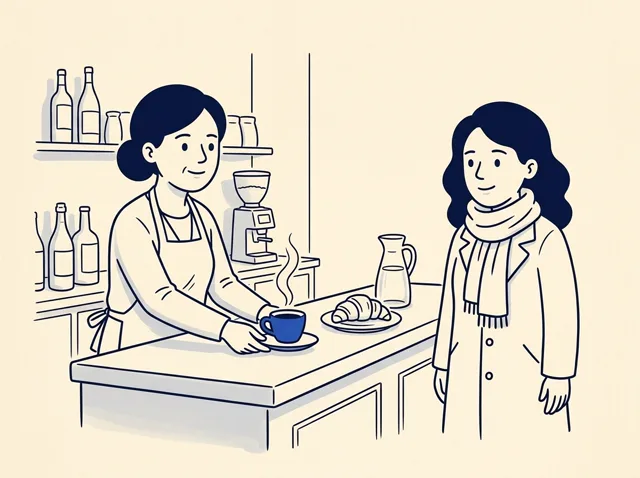
Four counters, the same order.
One program, from the first “hello” to everyday situations. Each unit is one short story, and you choose how to study it today: in pictures, by ear, or out loud. The rule is there to look up after you have listened.
There is no sign-up: access is by request, and the Beginner level is free. No promise of fluency by a deadline.
One program. Several modes.
Each unit is one short story. You choose how to study it: through pictures, by listening, or by speaking. Then you can go deeper with the rule, the practice and the sounds. Some units have a song, and the sentences come back days later for you to recall.
A scene mode (Listening, Speaking, or Pictures with the story listened to) completes the unit: you can move on, which does not mean you already know it. The other modes train something else with the unit’s sentences, on another day; the Song brings a traditional song linked to the theme.
The modes are there to review the same content in another way. They are not “the method for your style”.
Beginner 1 · Unit 1 · Bonjour ! (the 8 real pictures)
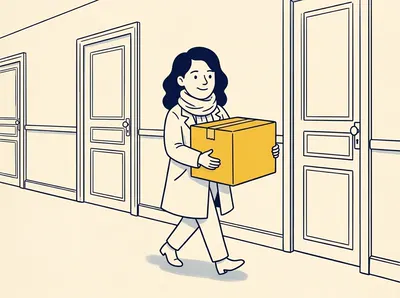
C'est Mia, avec un gros carton. 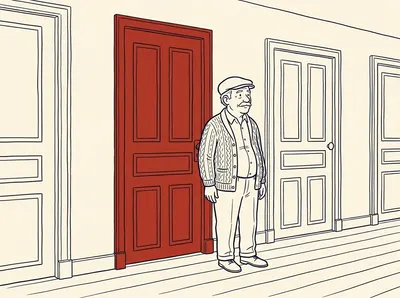
Devant la porte rouge, c'est Paul, le voisin. 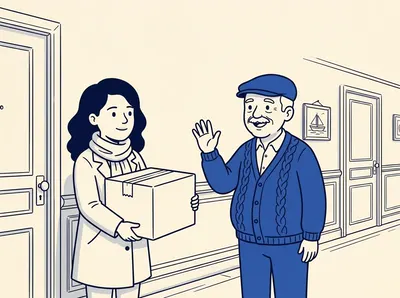
Paul dit : « Bonjour ! Je suis Paul. Vous êtes Maria ? » 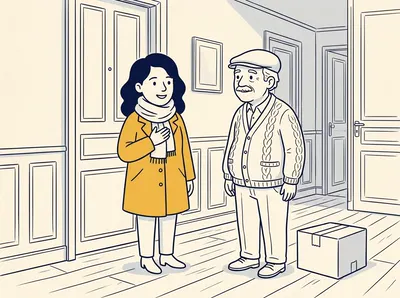
Elle dit : « Non, je m'appelle Mia. » 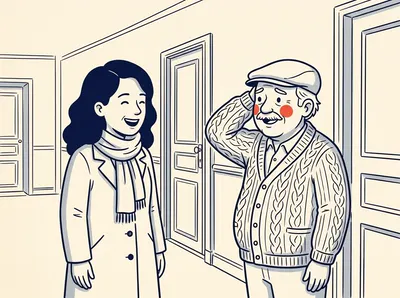
Paul est tout rouge : « Oh, pardon ! Enchanté, Mia ! » 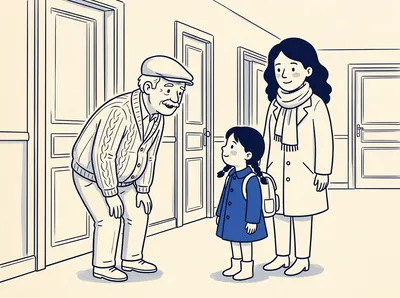
Paul dit à Léa : « Comment tu t'appelles ? » 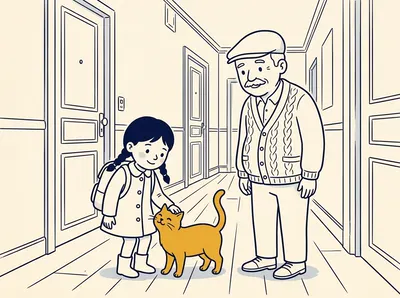
Elle s'appelle Léa. Et le chat ? Il s'appelle Filou. 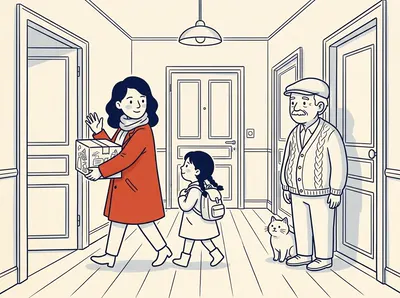
Mia dit : « Au revoir, Paul, à bientôt ! »
The core of the unit: a story in 8 pictures. Everything the modes show comes from here.
The eight modes
- PicturesThe story in pictures, one sentence at a time.
- ListeningListen to the story, then answer out loud.
- The pointThe rule the story used, and why.
- PracticeFill in, put in order, write what you hear.
- SoundsOne sound at a time: hear it, tell it apart, say it.
- SpeakingRehearse the scene out loud, at your own pace.
- SongA traditional song, with what it shares with the unit.
- I rememberThe picture comes back without the sentence: say it, then check.
Each language has its own colour and its own world.
The drawing is always in line, with just one thing in colour: the thing the sentence is about. On the Fluize page, the colour tells you which language the scene belongs to. English, Italian and Portuguese do not have a course yet. The sentences on this page are samples of the method.
Outdoors
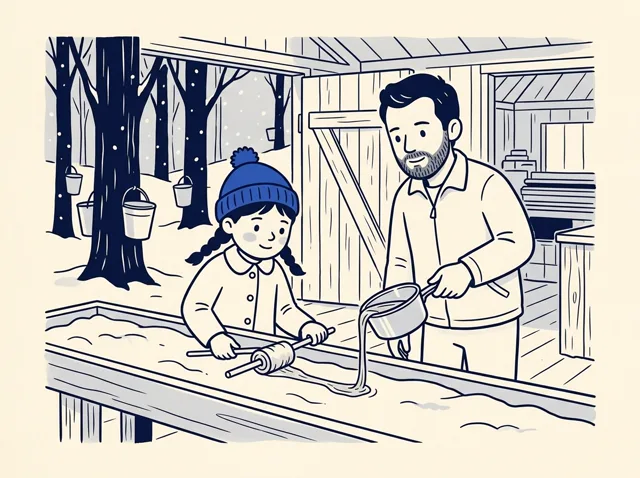
« Il neige : Léa met sa tuque. »
Français · Québec · the sugar shack

“The canoe is ready.”
English · Canada · the lake
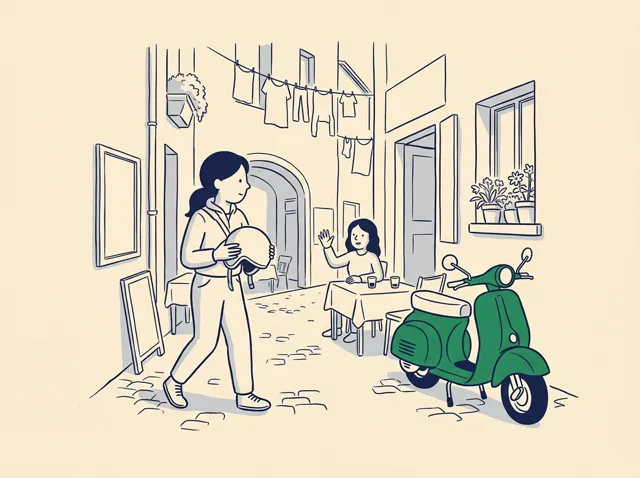
«Lo scooter è in piazza.»
Italiano · Italy · the piazza
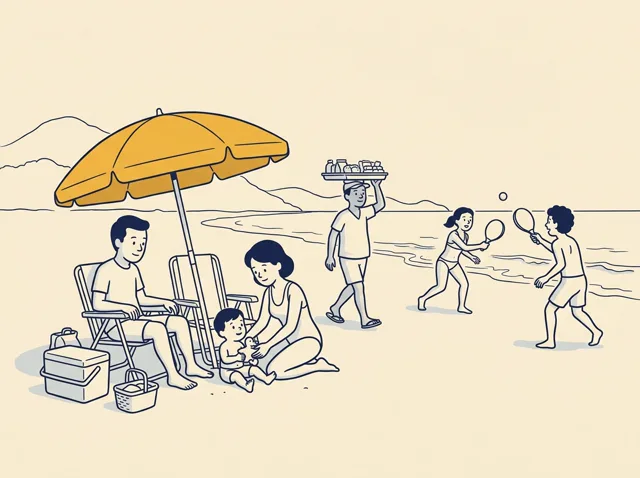
“O guarda-sol é nosso.”
Português · Brazil · the beach
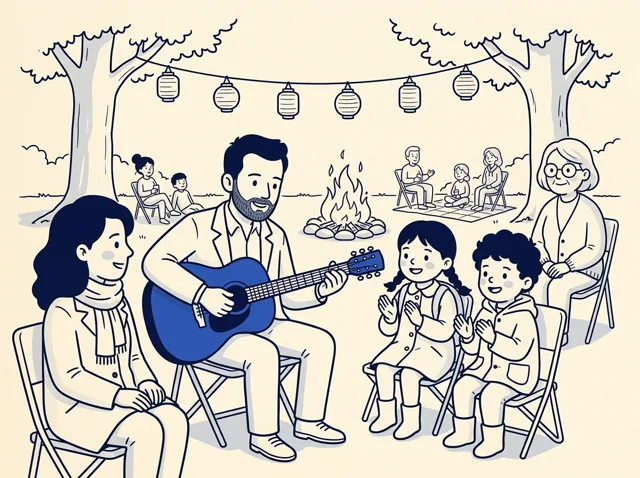
« Ce soir, Tom joue de la guitare. »
Français · Québec · Saint-Jean
In the street and at the market
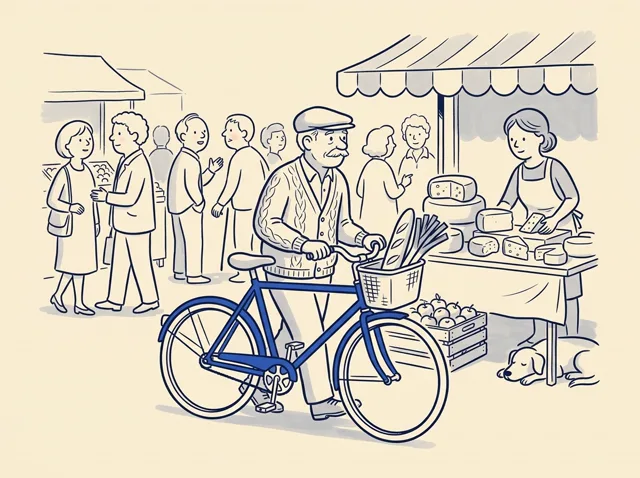
« Paul va au marché à vélo. »
Français · The market, Saturday morning
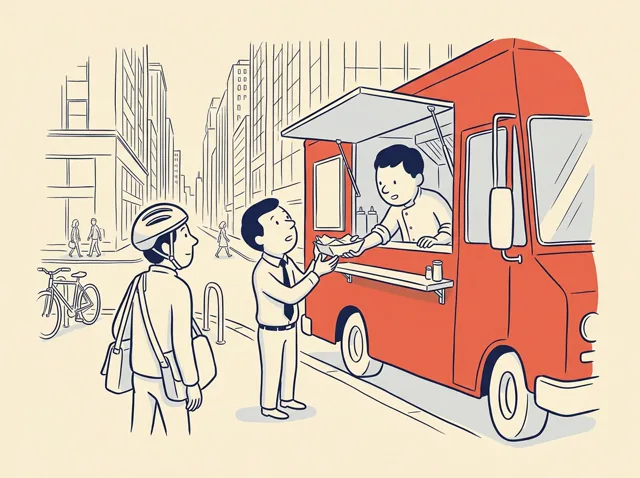
“The food truck is on the corner.”
English · Downtown · lunchtime
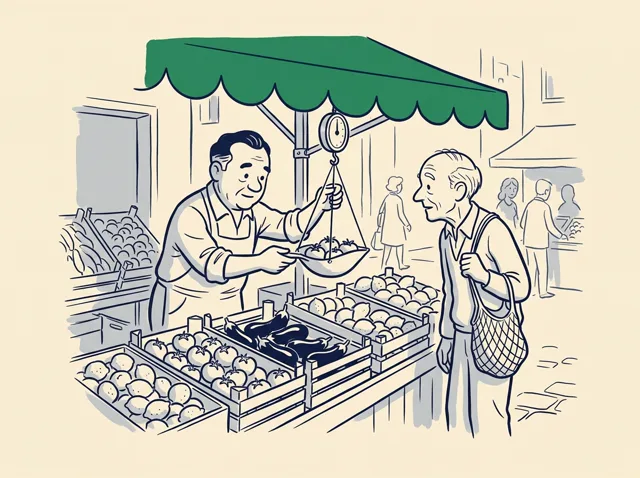
«I pomodori sono sotto la tenda.»
Italiano · Italy · the market
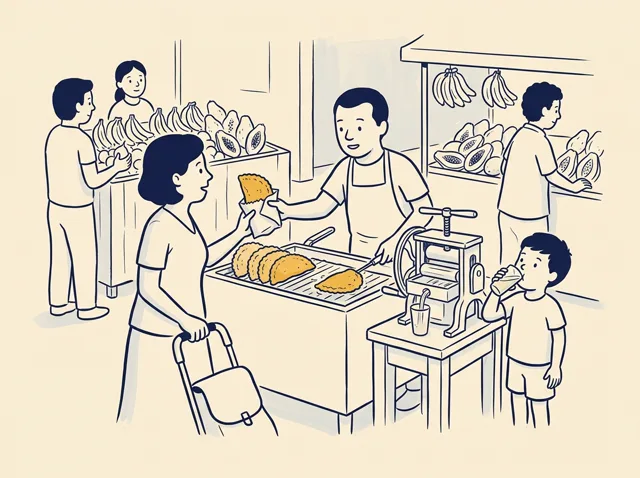
“O pastel está quentinho.”
Português · Brazil · the street market
With the family
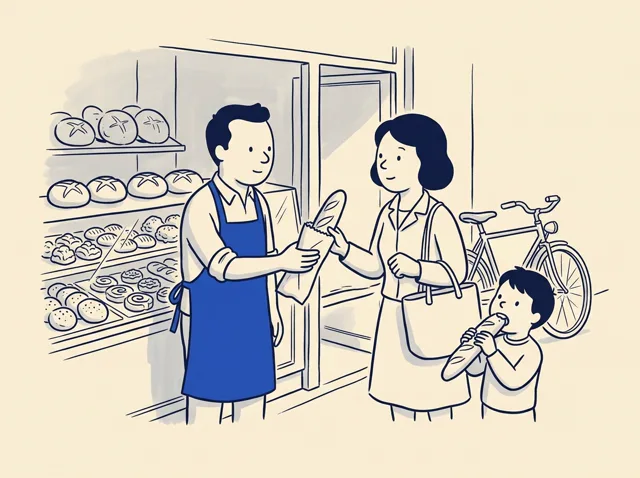
« Le boulanger porte un tablier. »
Français · In France · the bakery
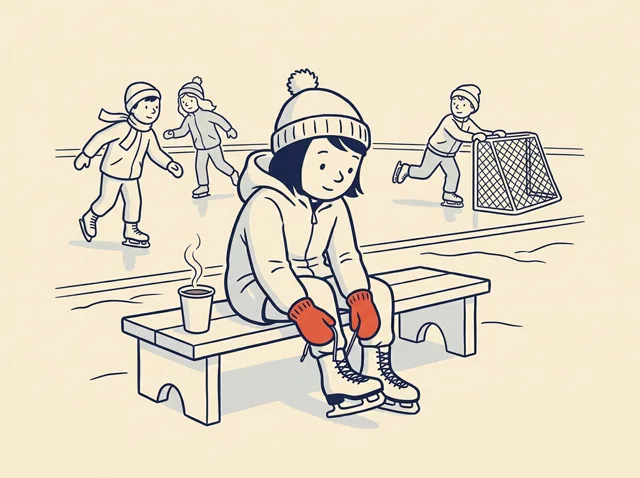
“Her mittens are warm.”
English · Canada · the skating rink
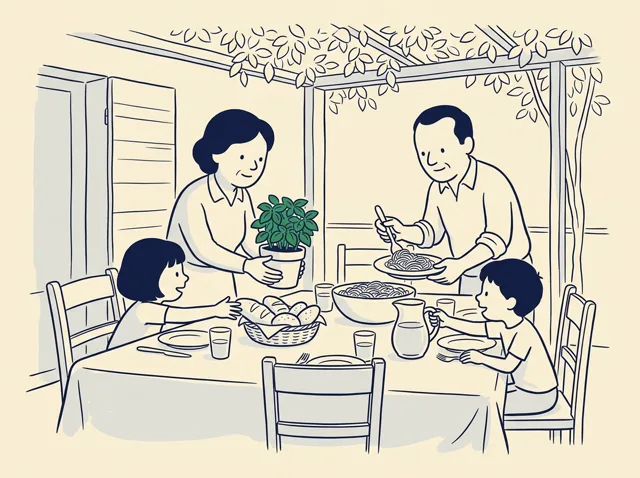
«La nonna porta il basilico.»
Italiano · Italy · Sunday lunch
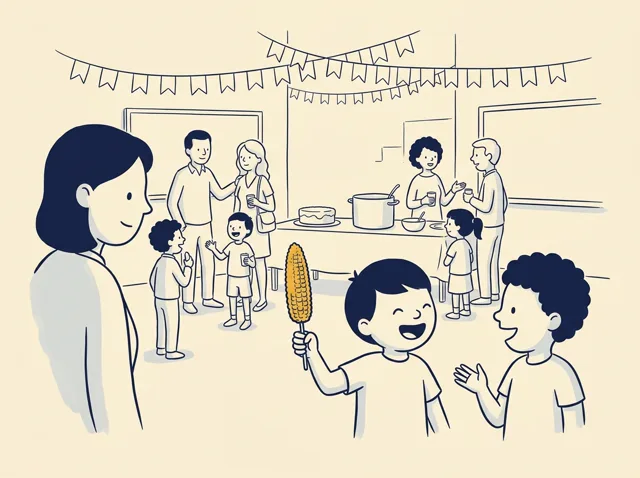
“Hoje tem milho na festa.”
Português · Brazil · the June festival
The four languages
Français
France and Canada
Open by request
See the French courseEnglish
United States and Canada
Coming soon
I am interestedItaliano
Italy
Coming soon
I am interestedPortuguês
Brazil
Coming soon
I am interested
We keep your request for when the course opens. Spanish: later.
Eight modes, one by one.
Each mode says, right under its name, whether it completes the unit.
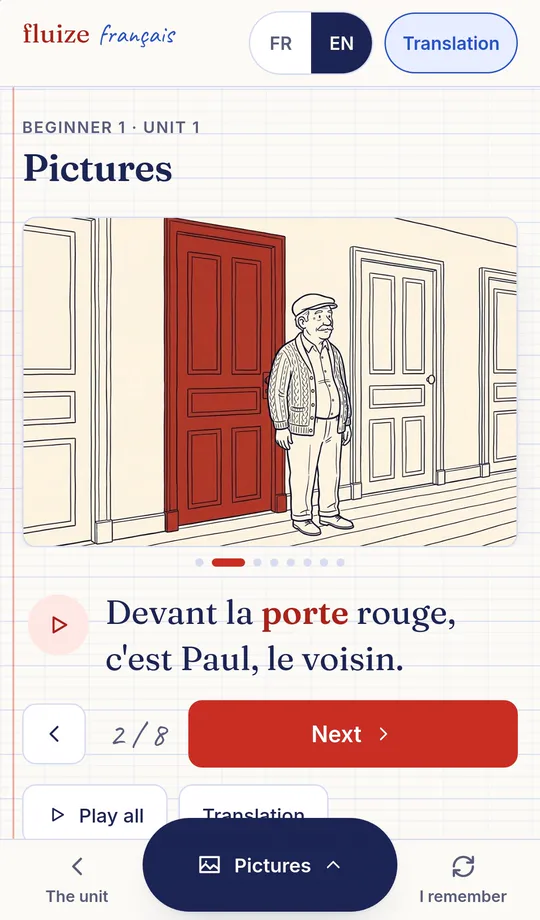
Pictures
The story in pictures, one sentence at a time.
Completes the unit, if you listened to the story.
- How it works
- The story in pictures, one sentence at a time. Only the thing the sentence is about is in colour, and the translation is one tap away.
- What you get
- You understand the scene and connect each sentence to what it means. It is a mode for understanding; for saying it, there are others.
- When to choose this mode
- On your first contact with the unit, before any question. Or with a child beside you: in “read together”, you read out loud to them the simple question shown on the screen.
The evidence for this mode
What research supports, and what it does not
In studies with single words, having a meaning aid next to the text helped people learn them, and picture plus translation helped more than translation alone.
Strength of the evidence: Medium. We found no study on drawings with a single colour.
The limit: Seeing the scene helps you understand, not speak. And the gain fades if you do not come back to the sentence on another day.
Sources. We read the abstracts of the studies, not the full texts: Ramezanali, Uchihara e Faez 2021, Shintani, Li e Ellis 2013.
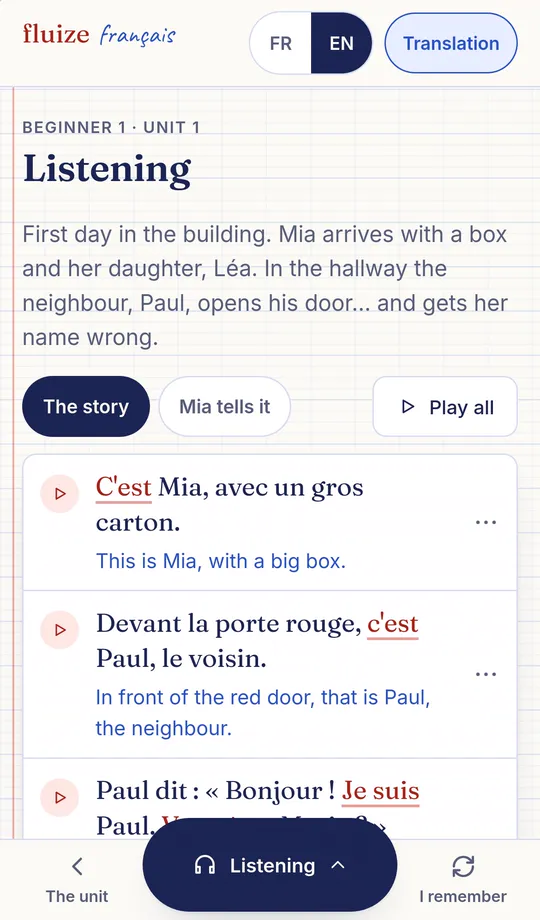
Listening
Listen to the story, then answer out loud.
Completes the unit, once you have listened to the story and the other point of view and revealed the answer to each question.
- How it works
- You hear the short story one fact at a time. After each fact, you answer simple questions about it out loud, usually two (yes or no, then "this or that"); the answer only shows after a pause. At the end comes the same story told from another point of view. The whole story and the point of view stay at hand to listen to again, as often as you like.
- What you get
- You train your ear with a story you understand, and you try to answer before you see the answer.
- When to choose this mode
- As a first contact or after Pictures, somewhere you can speak out loud. It is worth listening again on another day.
The evidence for this mode
What research supports, and what it does not
Listening to what you can understand is the basis of learning a language. In studies with words, trying to recall before seeing the answer made things stick more than restudying; applying that to a spoken question is our bet.
Strength of the evidence: Strong for remembering words. For a spoken answer to a heard question, it is our own inference.
The limit: One listen leaves little behind, and one unit has little to listen to: you need to come back to the story on other days and listen to more French outside the course. And the app does not listen to you; it only works if you really try to answer.
Sources. We read the abstracts of the studies, not the full texts: Karpicke e Roediger 2008, Brown, Waring e Donkaewbua 2008.
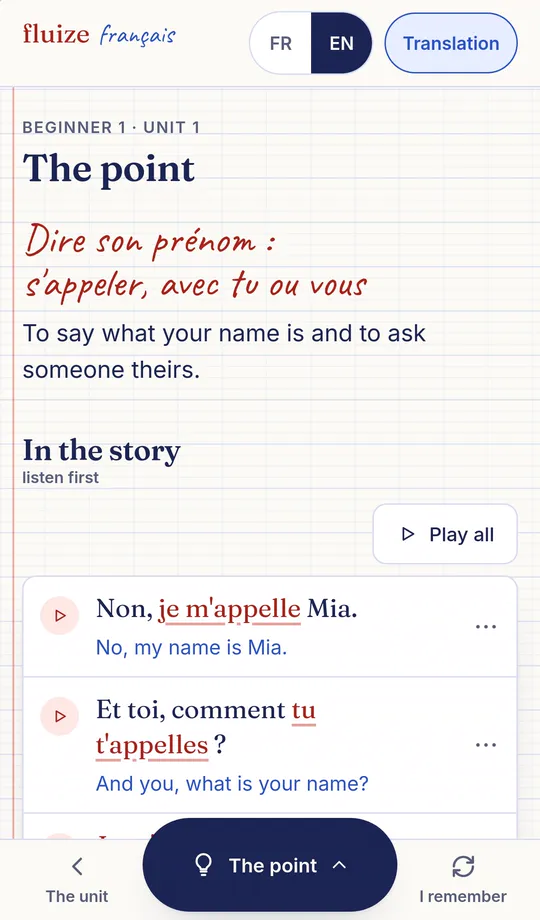
The point
The rule the story used, and why.
Mode done: it does not complete the unit on its own.
- How it works
- The rule the story used, with a table and examples to listen to. The rule stays closed until you open it. Then you hear pairs of sentences and decide what each one means.
- What you get
- You learn the rule the story used and you have a place to look it up: what it is for, the table, where Portuguese or English helps and where it misleads.
- When to choose this mode
- After hearing the story, when you want to know why the sentence is that way. Or before you write a message, to check.
The evidence for this mode
What research supports, and what it does not
In studies, teaching the rule explicitly produced gains on grammar tests. Those were courses of several hours; here it is one screen to consult after you have heard the story, much less than that.
Strength of the evidence: Strong for the gain measured in courses of several hours; disputed for spontaneous speech. For one screen to consult, it is our own inference.
The limit: Knowing the rule is not the same as using it when you speak. That step takes production practice, in another mode. This mode does not complete the unit on its own.
Sources. We read the abstracts of the studies, not the full texts: Norris e Ortega 2000, Shintani, Li e Ellis 2013.
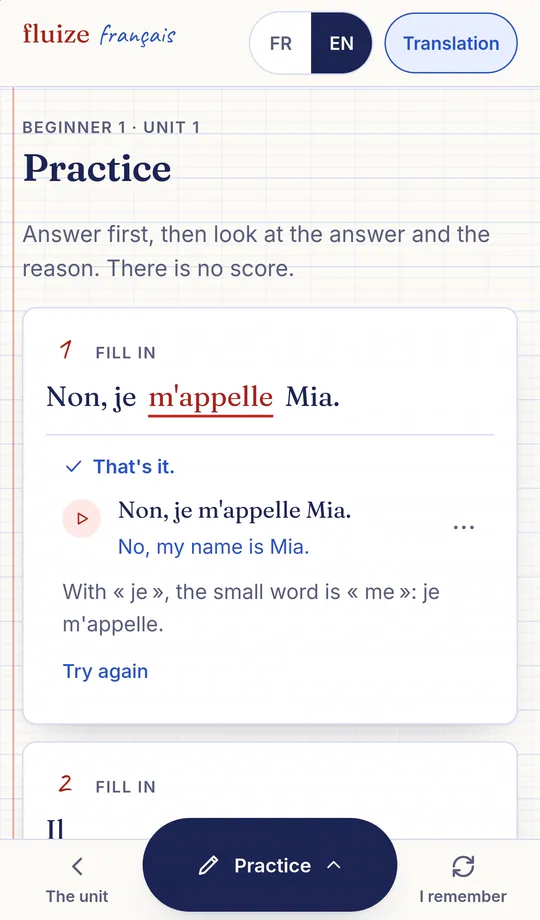
Practice
Fill in, put in order, write what you hear.
Mode done: it does not complete the unit on its own.
- How it works
- Fill in, conjugate, put in order, and write what you hear. You answer first; then you see the answer and one line of why. No score, no timer.
- What you get
- You build the unit’s sentences in writing, calmly, and you see the reason for each answer, even when you get it right.
- When to choose this mode
- After hearing the story or seeing the rule, when you can write without hurry. It is optional.
The evidence for this mode
What research supports, and what it does not
In studies, trying to answer before seeing the answer made things stick more than rereading, and a short explanation helped more than just “right” or “wrong”. That was measured with facts and words; for grammar forms it is our bet.
Strength of the evidence: Strong for remembering facts and words. For grammar forms and for these exercise types, it is our own inference.
The limit: Getting the exercise right does not guarantee getting it right when you speak. And we have no study on these exercise types as such: choosing them is our bet. It is optional, and it does not complete the unit on its own.
Sources. We read the abstracts of the studies, not the full texts: Yang et al. 2021.
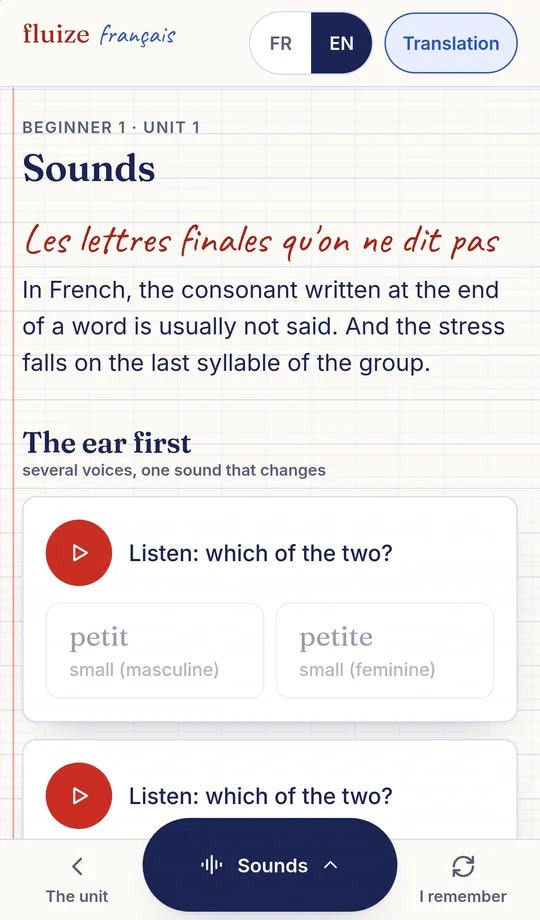
Sounds
One sound at a time: hear it, tell it apart, say it.
Mode done: it does not complete the unit on its own.
- How it works
- One sound per unit: you see how the mouth makes it, hear the contrast and decide which one you heard. Then you say it and record it.
- What you get
- You practise hearing one new sound of the language better. The goal is to be understood.
- When to choose this mode
- Somewhere quiet or with headphones, when two words sound the same to your ear.
The evidence for this mode
What research supports, and what it does not
In studies, training the ear with several voices improved how well people heard new sounds and, a little, their pronunciation. Those trainings were longer than one sound point per unit.
Strength of the evidence: Strong for the ear and medium for the mouth, with human voices and longer trainings. With generated voices, it is our own inference.
The limit: The goal is to be understood, not to lose your accent. The app does not judge your speech, and the voices are generated: the studies used human voices. When a sentence does not have its recorded voices yet, it plays in your device’s voice, and the app says so. This mode does not complete the unit on its own.
Sources. We read the abstracts of the studies, not the full texts: Uchihara, Karas e Thomson 2025, Saito e Plonsky 2019.
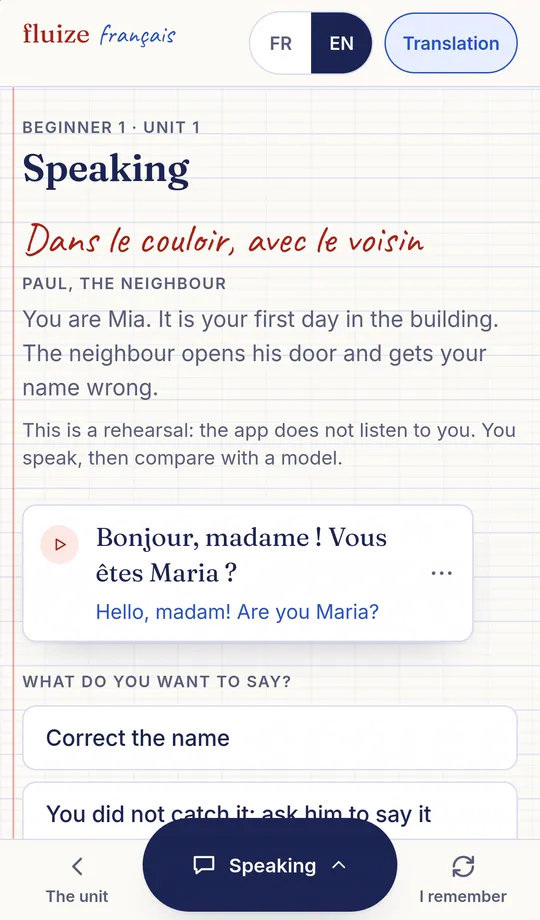
Speaking
Rehearse the scene out loud, at your own pace.
Completes the unit, once you take the dialogue to the end.
- How it works
- You rehearse the scene out loud, at your own pace: you choose what you want to say, say it, and hear two models. You can record and compare.
- What you get
- You arrive with the sentences rehearsed. It is rehearsal: the app does not listen or correct.
- When to choose this mode
- The day before a real situation, like the school gate, the café or a phone call. After hearing the story, and somewhere you can speak out loud.
The evidence for this mode
What research supports, and what it does not
In two separate studies, saying new words out loud helped people remember them, and repeating the same talk kept speech smoother. For rehearsing a dialogue as such we found no study: it is our bet.
Strength of the evidence: Medium for words; weak for rehearsing a dialogue, for which we found no study.
The limit: It is rehearsal, not conversation: the app does not listen to you or correct you. What research shows most strongly is talking with someone who answers back.
Sources. We read the abstracts of the studies, not the full texts: Icht e Mama 2022.
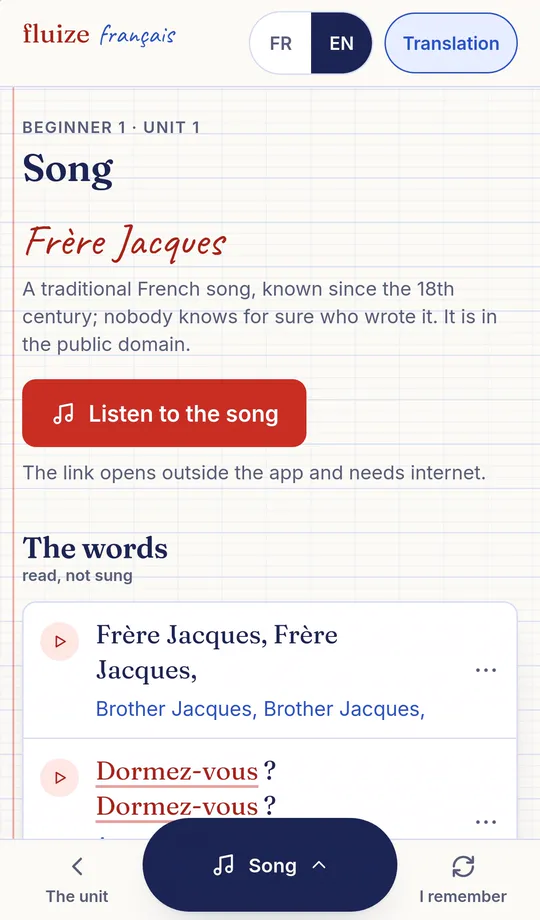
Song
A traditional song, with what it shares with the unit.
Mode done: it does not complete the unit.
- How it works
- A traditional French song tied to the theme, with what the lyrics share with the unit highlighted. The app tells you which parts of the lyrics you have not studied yet.
- What you get
- One more encounter with the language, through sound and rhythm. It is optional.
- When to choose this mode
- After the other modes, as a break. Or with a child, to sing along.
The evidence for this mode
What research supports, and what it does not
In some studies, singing helped people remember phrases and sound better in a new language. And a song gets repeated because you enjoy it.
Strength of the evidence: Weak. There are few studies, and they disagree.
The limit: The research disagrees: in one study, singing made the lyrics harder to recall. And the studies had people listen and sing; here, today, you get the lyrics, read in a speaking voice, and a link to the song. It is one more encounter, optional, and it does not complete the unit.
Sources. We read the abstracts of the studies, not the full texts: Ludke, Ferreira e Overy 2014, Racette e Peretz 2007.
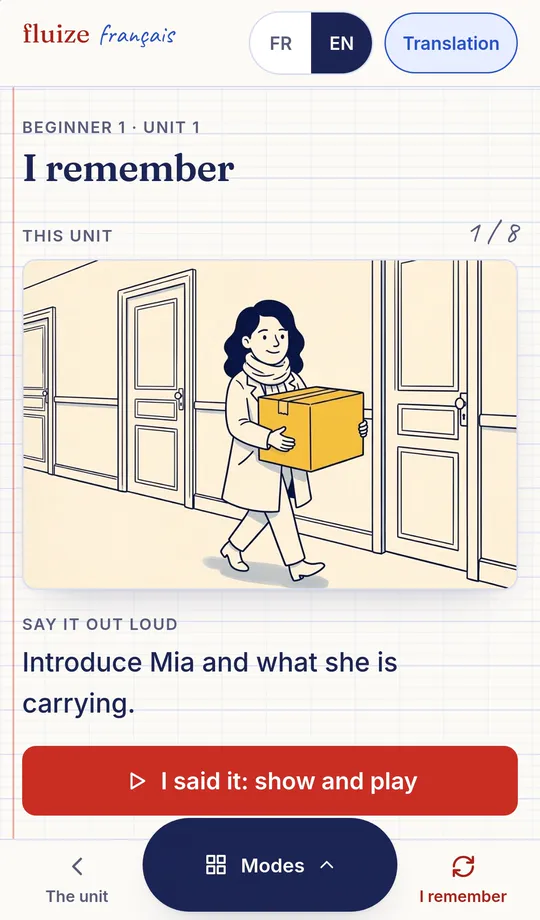
I remember
The picture comes back without the sentence: say it, then check.
It does not complete a unit: it is the return, on another day.
- How it works
- Days later, the picture comes back without the sentence. You say the sentence out loud, tap, and check. No score: you are the one who says whether you remembered.
- What you get
- You meet the sentences again on another day and try to recall them before you look. It is the return of a unit you have already studied.
- When to choose this mode
- On the days the app brings the pictures back, with a few minutes to spare. Not on the same day you studied the unit.
The evidence for this mode
What research supports, and what it does not
Trying to recall, on spaced-out days, is the way of studying with the strongest evidence: in studies, it did more than rereading or repeating everything on the same day. That was measured with words and facts.
Strength of the evidence: Strong for words and facts. For whole sentences said out loud, it is our own inference.
The limit: For whole sentences said out loud, it is our bet. The days when the picture comes back are our choice, and it only works if you try before you look. It does not complete a unit: it is the return of a unit you have already studied.
Sources. We read the abstracts of the studies, not the full texts: Latimier, Peyre e Ramus 2021.
Completing the unit with one scene mode is our decision, not a research finding. Among ways of studying, the one with the strongest evidence is coming back to the same content on another day and trying to recall it; that was measured with words and facts.
How we read the strength of the evidence
- Strong
- many studies, with material and people like ours.
- Medium
- there are studies, but far from our case: children, a lab, another language.
- Weak
- a few small studies, or results that disagree.
Even what is strong was measured in conditions that are not those of our app.
Your first lesson, in four steps.
This is unit 1 of Beginner 1, as it looks on a phone.
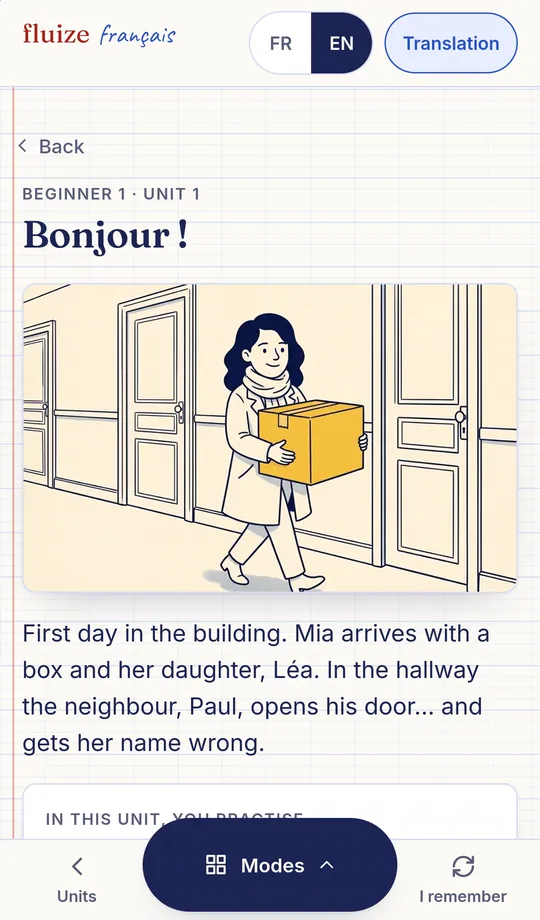
Open unit 1, « Bonjour ! ».
First day in the building. Mia arrives with a box and her daughter, Léa. In the hallway the neighbour, Paul, opens his door… and gets her name wrong.
See the story in 8 pictures.
One sentence per picture. Only the thing the sentence is about is in colour. Tap to listen; the translation is one tap away.
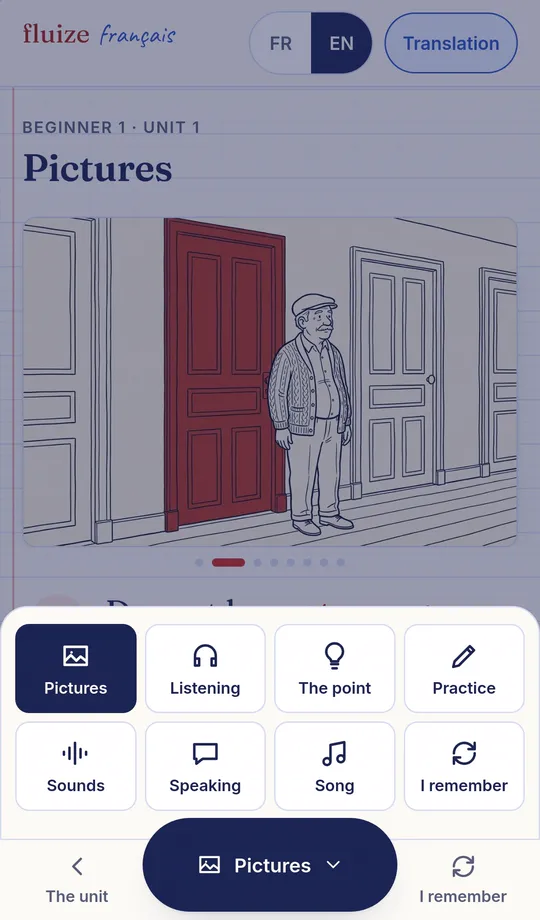
Switch modes whenever you like.
The modes button opens the other ways of studying the same story.
The next day, “I remember”.
The picture comes back without the sentence. You say it out loud, tap, and check. You are the one who says whether you remembered.
What to expect, and what we do not promise.
What you can expect
- By the end of the Beginner level: having rehearsed the everyday situations the program covers, so you can get by in them calmly. Introducing yourself, ordering, making plans, saying what you did. Today the 8 units of Beginner 1 are written; the other 16 are in the program and do not exist yet.
- If you studied the language before: a good part comes back, and faster than learning from scratch. We do not promise that all of it comes back: vocabulary returns better than verbs and pronouns, which is where the work is.
- Short units that end: a story of 6 to 8 pictures, and every mode has an end.
- The same sentences come back on other days, further and further apart. It is a reminder, not a demand.
- Explanations in Portuguese or in English, and a calm tone. Mistakes are part of it.
What we do not promise
- No fluency, and no deadline. We have no data for that.
- No game. No points, trophies, streaks or timers.
- No grade for your speech. The app does not listen to you or correct you.
- No “method for your style”. There is no evidence that matching the format to your preference helps you learn more.
- No easy ride. Trying to recall takes work, and that work is what makes it stick.
- No promise that the course is enough. The amount of listening and reading a language takes comes from outside it.
- No native accent. The goal is to be understood.
Request your access.
There is no sign-up. You ask, and the answer comes by email. The Beginner level is free.
After your request
- We read the request. Accounts are created by hand, one at a time, and that can take a few days.
- You get an email with the address to sign in and a temporary password.
- For English, Italian and Portuguese, we keep your request for when the course opens.
Privacy
- What we keep from an access request: your name, your email, the language you chose, your message (if you write one) and the language of this page.
- What for: to answer the request and create your account. It does not go on any mailing list.
- Against abuse: a mark of origin that changes every day is kept with the request. The IP address itself is not stored with it.
- On this page: there are no tracking cookies and no third-party analytics. Your theme choice stays on your device.